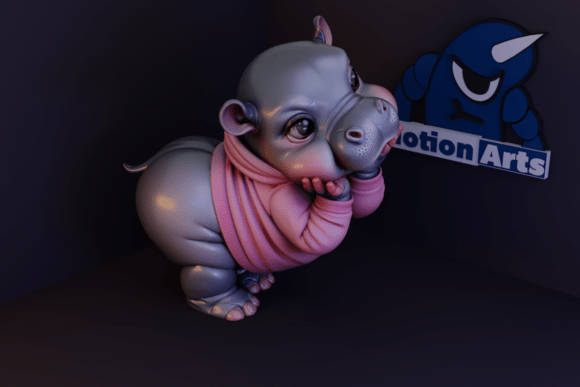
Cute Hippopotamus Fofo 3D Model for 3D Print: A Practical Evaluation
In the rapidly expanding ecosystem of digital fabrication, the availability of high-quality, beginner-friendly assets is often a bottleneck for new creators. The Cute Hippopotamus Fofo 3D Model for 3D Print addresses this specific gap by offering a design that balances aesthetic appeal with technical reliability. This model represents a shift away from overly complex geometries toward accessible, emotive character designs that perform consistently across different printing technologies. For professionals managing print farms, educators introducing students to additive manufacturing, or hobbyists seeking reliable decorative pieces, understanding the practical utility of such a model is essential before committing resources.
Design Philosophy and Structural Integrity
The primary value proposition of the Cute Hippopotamus Fofo 3D Model lies in its adherence to "print-first" design principles. Unlike many artistic 3D models that prioritize visual fidelity over manufacturability, this asset features well-balanced volumes and soft details specifically engineered to minimize common printing failures. The character's childlike proportions and rounded shapes are not merely stylistic choices; they serve a functional purpose by reducing stress points and eliminating sharp corners that are prone to warping or breaking during the cooling phase of FDM printing.
From a structural standpoint, the model demonstrates excellent stability. The pose, where the little paws support the face, creates a natural tripod effect when oriented correctly on a build plate. This inherent balance reduces the reliance on excessive support material, which is a significant factor in both resin and filament workflows. Excessive supports can mar the surface finish and require hours of post-processing time. By ensuring clean transitions between body parts, the Cute Hippopotamus Fofo 3D Model allows for a smoother extraction process, preserving the gentle expression and playful charm of the character without the need for aggressive sanding or chemical smoothing.
Performance Across Printing Technologies
One of the most critical aspects of evaluating any 3D asset is its versatility across hardware platforms. The Cute Hippopotamus Fofo 3D Model is optimized for both Stereolithography (SLA/DLP) resin printers and Fused Deposition Modeling (FDM) machines, though the approach differs slightly for each.
- Resin Printing: For resin users, the model's smooth curves and lack of intricate, thin protrusions make it ideal for capturing fine details. The soft details render exceptionally well at lower layer heights, resulting in a glossy, toy-like finish straight out of the vat. However, because the model requires supports, careful placement is necessary to avoid damaging the facial features during removal.
- FDM Printing: For filament users, the thick, rounded geometry prevents stringing and ensures good layer adhesion. The design tolerates standard nozzle sizes (0.4mm) effectively, making it an excellent test piece for calibrating temperature and flow rates. The absence of overhangs steeper than 45 degrees in most areas means that even beginners can achieve a successful print without advanced slicer settings.
It is important to note that while the model is robust, the requirement for supports remains a non-negotiable aspect of the workflow. Users must allocate time for support generation in their slicing software and subsequent removal. This is a standard procedure for character models with dynamic poses, but it should be factored into the total project time.
Usability for Beginners and Educators
The classification of this asset as a "Beginner" level project is well-deserved. In educational settings or for those just entering the world of 3D printing, the margin for error is often slim. Failed prints lead to wasted material and frustration, which can deter continued learning. The Cute Hippopotamus Fofo 3D Model mitigates these risks through its forgiving geometry.
For educators, this model serves as an effective tool for teaching fundamental concepts such as orientation, support structures, and infill density. Because the final result is visually rewarding—a cute, cartoon-style hippo with a gentle expression—students receive immediate positive reinforcement. The emotional appeal of the character makes the technical lesson more engaging. Furthermore, the consistent results ensure that a classroom environment can produce uniform outcomes, which is vital for grading or group projects.
Professionals and freelancers may also find value here for rapid prototyping or client gifts. When a business needs a personalized token of appreciation that conveys warmth and creativity, a custom-painted version of this model can be produced quickly. The durability of the design ensures that these items can withstand handling, making them suitable for children's projects or durable desk decorations.
Aesthetic Versatility and Post-Processing
Beyond the mechanics of printing, the Cute Hippopotamus Fofo 3D Model offers significant potential for customization. The cartoon style and clean surfaces provide a blank canvas for various finishing techniques. The rounded shapes are particularly conducive to airbrushing or hand painting, allowing for a wide range of color palettes to suit different themes or brand identities.
The model's design prioritizes an excellent finish even without complex post-processing. While a light sanding might be required to remove support scars, the overall texture is smooth enough that clear coats or matte sprays can be applied directly after washing and curing (for resin). This efficiency is crucial for small business owners who need to maintain a steady production schedule. The ability to move from print bed to finished product quickly increases the return on investment for every hour spent printing.
Practical Limitations and Considerations
While the Cute Hippopotamus Fofo 3D Model is highly versatile, it is not without limitations. The primary constraint is the necessity for support structures. Users with very limited post-processing tools or those seeking a completely "support-free" experience may find this challenging. Additionally, while the model is designed for durability, the delicate nature of the facial expression means that rough handling during support removal could compromise the final look. Precision is key.
Another consideration is the scale. The model is designed with specific proportions in mind. Scaling it down too aggressively may cause the loss of the subtle details that define its cuteness, while scaling it up significantly might introduce internal stresses if the infill pattern is not adjusted accordingly. Users should adhere to the recommended size ranges provided by the designer to ensure optimal performance.
Conclusion: Value and Application
The Cute Hippopotamus Fofo 3D Model for 3D Print stands out as a resource that successfully merges artistic intent with engineering pragmatism. It is not merely a file to be downloaded; it is a tool that facilitates successful printing experiences across a spectrum of user expertise. Its strengths lie in its balanced volumes, compatibility with major printing technologies, and the emotional resonance of its design.
For entrepreneurs looking to expand their product lines with low-risk decorative items, educators seeking reliable curriculum materials, or hobbyists wanting to master the basics of character printing, this model offers substantial long-term value. It removes the guesswork often associated with new files, providing a predictable path to a high-quality physical object. By choosing assets like this one, creators can focus less on troubleshooting failed prints and more on refining their craft and exploring the creative possibilities of 3D printing.