Exploring Isometric Business and Web Design Elements: A Visual Revolution in Digital Creativity
Isometric design has become a cornerstone of modern digital art and web development, especially when visual clarity and depth are essential. With its 3D-like perspective rendered in 2D space, isometric illustration offers a clean, scalable, and engaging way to represent complex ideas. When applied to business and web design elements, this technique transforms how information is communicated, making it more digestible, visually appealing, and universally understandable.
The Rise of Isometric Illustrations in Digital Communication
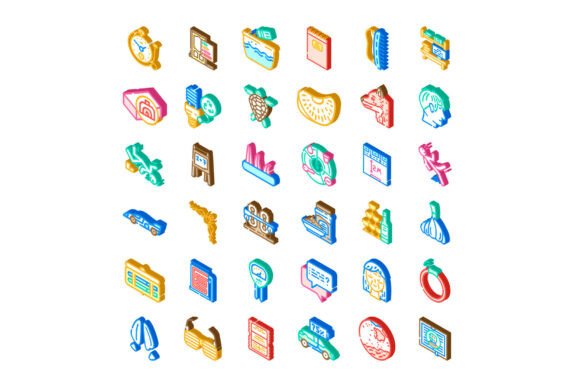
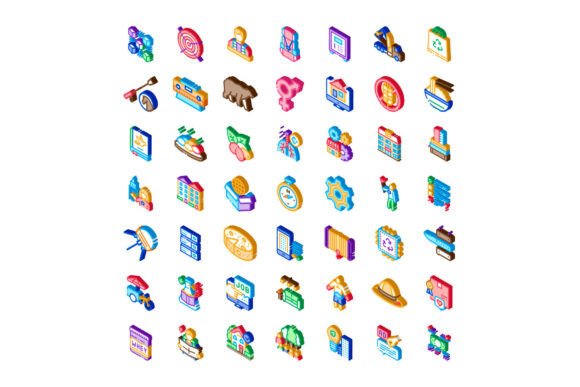
Isometric Business and Web Design Elemen have gained traction in recent years due to their ability to simplify complex systems into intuitive visuals. These illustrations are not just decorative—they serve a functional purpose. Whether it's a flowchart for a business process, a UI component in web design, or a visual metaphor for abstract concepts like cloud computing or digital marketing, isometric graphics offer a consistent and scalable solution.
Unlike traditional flat design, which can sometimes feel static, isometric illustrations provide a sense of depth without the performance overhead of full 3D rendering. This makes them ideal for responsive websites, mobile applications, and presentations where clarity and visual engagement are key. The use of a consistent 30-degree angle across all elements ensures uniformity, allowing designers to build cohesive visual systems that scale across platforms.
Key Characteristics of Isometric Business Graphics
Isometric Business and Web Design Elemen are defined by several distinct visual traits:
- Consistent Perspective: All elements are drawn at a 30-degree angle, maintaining a uniform visual language across different illustrations.
- Flat Color Application: Despite the 3D illusion, colors are typically flat, avoiding gradients and shadows that could complicate scalability.
- Modular Components: Each icon or illustration can be reused and combined with others, enabling flexible compositions for dashboards, infographics, and more.
- High Scalability: Vector-based formats ensure crisp visuals at any size, making them suitable for both screen and print media.
These characteristics make isometric design particularly effective for representing organizational structures, workflow diagrams, product features, and service offerings in a visually compelling way.
Practical Applications Across Industries
From startups to enterprise-level corporations, Isometric Business and Web Design Elemen are being integrated into a variety of digital platforms. Here are some notable use cases:
- User Interfaces: Web and mobile apps use isometric icons to guide users through complex processes, such as onboarding, settings navigation, or feature explanations.
- Data Visualization: Infographics and reports often incorporate isometric illustrations to break down data into digestible visuals, especially when explaining business models or market trends.
- E-learning Platforms: Educational websites and training modules use isometric graphics to simplify abstract concepts like digital marketing strategies, cybersecurity frameworks, or software development life cycles.
- Marketing and Branding: Companies use isometric illustrations in landing pages, social media posts, and promotional materials to create a modern and approachable brand identity.
For example, a SaaS company might use isometric visuals to explain how their product integrates with other tools in a customer's tech stack. Similarly, a freelance web designer might use isometric UI components to demonstrate how different elements of a website work together to enhance user experience.
Advantages of Using Isometric Elements in Web Design
Web designers are increasingly turning to Isometric Business and Web Design Elemen for several compelling reasons:
- Visual Hierarchy: Depth and spatial relationships help users quickly understand the layout and functionality of a web page.
- Engagement: The modern aesthetic of isometric graphics can increase user engagement and time spent on a page.
- Customizability: Designers can easily modify colors, shapes, and compositions to match brand guidelines or adapt to different themes.
- Cross-Platform Consistency: These elements maintain visual coherence across devices, ensuring a seamless experience whether viewed on desktop, tablet, or mobile.
Moreover, isometric illustrations are well-suited for storytelling. A designer can use a sequence of icons to guide users through a process, such as signing up for a service, completing a purchase, or understanding how a product works. This narrative approach enhances user comprehension and retention.
Choosing the Right Tools for Creating Isometric Designs
Creating high-quality Isometric Business and Web Design Elemen requires the right tools and techniques. Designers often use vector graphic software such as Adobe Illustrator, Figma, or Sketch to build scalable illustrations. These platforms offer grid systems and plugins that streamline the creation of isometric views.
Additionally, there are pre-built isometric icon sets and design kits available from marketplaces like Envato Elements, Noun Project, and Creative Market. These resources provide a ready-made foundation for designers who want to integrate isometric visuals without starting from scratch.
When selecting tools or assets, it's important to consider:
- Compatibility: Ensure the design files are compatible with your existing workflow and technologies.
- Licensing: Check usage rights, especially for commercial projects or client work.
- Customization Options: Choose assets that can be easily edited and adapted to your brand’s visual language.
Integrating Isometric Graphics into Your Website or App
Once you've selected or created your Isometric Business and Web Design Elemen, the next step is integrating them into your digital product. Here are some best practices:
- Responsive Design: Use SVG (Scalable Vector Graphics) format to ensure images remain sharp on all screen sizes and resolutions.
- Performance Optimization: Compress files without sacrificing quality to maintain fast load times.
- Contextual Placement: Position isometric visuals where they can enhance understanding, such as alongside text explanations or within interactive elements.
- Consistency: Maintain a unified visual style throughout the site or app to avoid confusing users with mismatched design elements.
For instance, a landing page for a project management tool might use isometric illustrations to show how tasks are organized, how teams collaborate, and how data is visualized within the platform. These visuals reinforce the product’s value proposition while guiding the user toward key features.
Future Trends in Isometric Design
As web design continues to evolve, so too does the application of isometric graphics. Designers are experimenting with more dynamic compositions, integrating subtle animations, and blending isometric visuals with other design styles like glassmorphism or neumorphism.
Another emerging trend is the use of isometric illustrations in augmented reality (AR) interfaces and immersive web experiences. As the web becomes more interactive and experiential, isometric design offers a scalable and visually rich solution for representing digital environments.
Furthermore, the rise of no-code and low-code platforms has made it easier for non-designers to incorporate isometric elements into their projects. Pre-built templates and drag-and-drop editors allow entrepreneurs, educators, and small business owners to leverage the power of isometric visuals without needing advanced design skills.
Final Thoughts on the Role of Isometric Design in Modern Web Development
Isometric Business and Web Design Elemen are more than just a passing trend—they represent a shift toward more intuitive, engaging, and accessible digital communication. Whether used in a startup pitch deck, a corporate dashboard, or an educational website, these visuals help bridge the gap between complexity and clarity.
As designers and developers continue to explore new ways to apply isometric illustration, its role in enhancing user experience, simplifying information, and supporting brand storytelling will only grow. By understanding the principles, tools, and best practices outlined here, you can harness the full potential of isometric design in your next project.