3D Pastel Days of the Week Clipart: A Visual Tool for Modern Classrooms
In the bustling environment of a preschool or kindergarten classroom, the transition from chaotic play to structured learning often hinges on one simple element: clarity. Children in these early developmental stages rely heavily on visual cues to understand the world around them, particularly abstract concepts like time and sequence. This is where 3D Pastel Days of the Week Clipart becomes more than just a decorative asset; it transforms into a functional pedagogical tool. By combining soft, inviting colors with a tactile 3D aesthetic, these digital resources bridge the gap between abstract calendar dates and concrete understanding for young learners.
Transforming Morning Meetings with Bubbly Visuals
The morning meeting, or circle time, is the heartbeat of any early childhood education routine. It sets the tone for the day, offering a moment for connection, attendance taking, and setting expectations. However, maintaining engagement during this time can be challenging when children are tired or distracted. Traditional flat text labels often fail to capture the attention of a five-year-old. In contrast, 3D Pastel Days of the Week Clipart introduces a sense of depth and fun that naturally draws the eye.
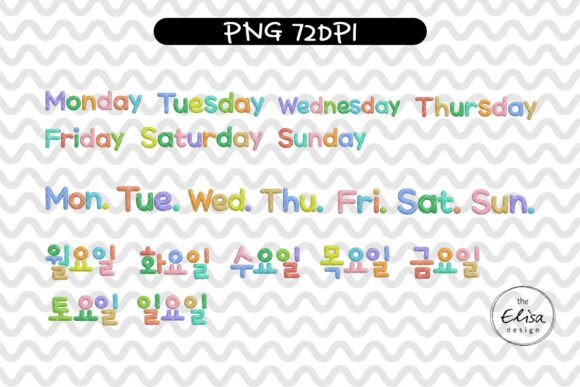
Imagine a scenario where a teacher places a bright, bubbly "Monday" icon onto a pocket chart. The soft pastel hue—perhaps a gentle mint green or a warm lavender—stands out against the whiteboard without being overstimulating. The 3D effect gives the lettering a playful, almost toy-like quality that invites interaction. Instead of passively reading a word, children are drawn to touch, point, and discuss the object. This engagement fosters a smoother transition into the day's activities, turning a routine administrative task into an interactive learning moment.
Bridging Cultures with Bilingual Labels
One of the most significant advantages of modern educational clipart sets is their inclusivity. Many classrooms today are linguistically diverse, and introducing second languages at a young age offers cognitive benefits that last a lifetime. The English Korean Days of the Week feature within these clipart sets provides a seamless way to introduce Hangul alongside English.
Consider a classroom with a mix of native English speakers and Korean heritage students. Using bilingual labels validates the home language of non-native speakers while exposing all students to new sounds and symbols. When a child sees "Tuesday" paired with its Hangul equivalent, it normalizes multilingualism. This isn't just about translation; it's about representation. For parents who speak Korean, seeing their language displayed prominently on the classroom wall creates a welcoming atmosphere. For others, it sparks curiosity and opens doors to cultural discussions during storytime or snack breaks.
This approach aligns perfectly with multicultural education goals. It moves beyond tokenism by integrating language learning into the daily rhythm of the school day. Every time the class updates the calendar, they are practicing vocabulary in two languages simultaneously, reinforcing memory through repetition and visual association.
Practical Applications Beyond the Pocket Chart
While the primary design intent for these assets is often the standard classroom pocket chart, their utility extends far beyond that single application. The high-resolution PNG format (1000px) ensures that the graphics remain crisp whether printed small for individual desks or blown up for large bulletin boards.
- Magnetic Bulletin Boards: Teachers can print these clips on cardstock, laminate them, and attach magnets to the back. This allows for easy manipulation on metal surfaces, perfect for interactive lessons where students move the days around to answer questions about yesterday, today, and tomorrow.
- Digital Learning Environments: With the rise of hybrid learning, these files are ready for use in virtual classrooms. A teacher can drag and drop the 3D icons into a shared screen during a Zoom lesson, maintaining the visual continuity even when students are remote.
- Home-School Connection: Parents can download and print these calendars to reinforce learning at home. Consistency between the school environment and the home environment helps solidify time management skills. A child who recognizes the "Wednesday" bubble at school will easily spot it on their home fridge calendar.
- Individual Student Calendars: For students who need extra support with sequencing, teachers can create personalized mini-calendars using these clips. Each child can have their own set of days to manipulate, fostering independence and self-regulation.
Design Choices That Support Early Development
The choice of color and style in educational materials is never arbitrary. The pastel palette found in these 3D clips serves a specific psychological purpose. Bright, neon colors can sometimes be overwhelming for young sensory systems, leading to distraction or anxiety. Pastels, on the other hand, offer high visibility with low aggression. They allow children to distinguish between different days clearly without causing visual fatigue.
Furthermore, the "bubbly" font style mimics handwriting and organic shapes, which feels less rigid and more approachable than standard serif or sans-serif typefaces. This aesthetic lowers the barrier to entry for pre-readers. Even if a child cannot yet decode the letters "M-O-N-D-A-Y," the unique shape and color of the Monday bubble become a recognizable symbol. This is the foundation of literacy: associating symbols with meaning before mastering the mechanics of reading.
Considerations for Implementation
Before integrating these resources into your teaching toolkit, there are a few practical considerations to keep in mind. First, ensure you have access to the necessary printing equipment. Since these are digital downloads, you will need a printer capable of handling the file resolution effectively. While the files are provided at 72dpi for web and general use, printing on high-quality cardstock is recommended to maintain the vibrant look of the pastels.
Second, consider the durability of your display method. If you are using these for a pocket chart that gets handled dozens of times a day, lamination is essential. Without it, the edges may fray, and the pastel colors might fade with constant friction. Investing a little extra time in laminating or mounting these prints will extend their lifespan significantly, making them a cost-effective resource for the entire school year.
Finally, think about how you will introduce the concept to your students. Simply hanging the calendar up isn't enough. Use the visuals as a springboard for conversation. Ask questions like, "What comes after the blue bubble?" or "Which day do we have our library visit?" This active usage turns a static image into a dynamic learning tool.
Empowering Educators with Instant Resources
The beauty of digital clipart lies in its immediacy. Teachers often find themselves scrambling for materials right before a unit begins or when a current resource has been lost or damaged. An instant download of 21 digital files solves this problem instantly. There is no waiting for shipping, no hunting through physical bins for missing pieces. You receive a complete set—seven days in English, seven in Korean, and potentially variations in style—all in one zip folder.
This convenience allows educators to focus on what truly matters: teaching. Instead of spending hours creating handmade decorations, teachers can spend that time planning engaging lessons or connecting with students. The 3D Pastel Days of the Week Clipart set acts as a reliable backbone for classroom organization, ensuring that the visual aids are always professional, consistent, and developmentally appropriate.
Whether you are a seasoned veteran looking to refresh your classroom decor or a new teacher building your first curriculum, these tools offer a blend of aesthetics and functionality that supports both the educator and the learner. By choosing resources that are visually appealing, culturally inclusive, and practically versatile, you create an environment where every child feels seen, understood, and ready to learn.