Futuristic 3D Wireframe Visualization of Cosmic Structures
Blending Science and Aesthetics in Digital Design
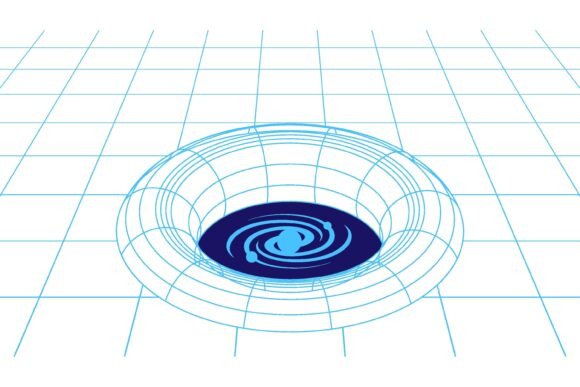
The Futuristic 3D Wireframe Visualization of celestial phenomena represents a powerful intersection of science, design, and storytelling. At its core, this type of visualization uses advanced modeling techniques to render complex astrophysical structures—like black hole accretion disks—in a clean, structured, and visually compelling format. The use of glowing blue orbits, sleek wireframes, and a minimalistic white backdrop transforms abstract cosmic forces into tangible, interactive visuals. Whether used for educational content, digital art, or UI/UX design, this approach offers a unique way to communicate both beauty and complexity.
Understanding the Visual Language
At first glance, the 3D wireframe structure may appear purely aesthetic. However, it's rooted in real scientific data. The concentric grid design mirrors gravitational fields and orbital mechanics, while the glowing blue paths represent energy flow and motion. Designers and developers can use this visual language to represent not only cosmic phenomena but also abstract data flows, network structures, and system dynamics in a variety of fields—from AI architecture to financial modeling.
Creative Applications Across Industries
This style of visualization opens up a broad spectrum of creative applications. Here are a few practical directions to explore:
- Educational Tools: Bring astrophysics to life in classrooms or online courses by using interactive wireframe models to explain black holes, gravitational pull, and space-time curvature.
- Digital Art Installations: Combine this aesthetic with motion graphics or projection mapping for immersive art exhibits that explore the intersection of science and design.
- UI/UX Design: Use simplified versions of these wireframes as loading animations, background visuals, or navigation systems in high-tech web or app interfaces.
- Brand Identity: Incorporate the clean, futuristic lines into logos or marketing materials for tech startups, space exploration companies, or innovation labs.
- Data Visualization: Translate abstract datasets—like network traffic, AI decision trees, or supply chain logistics—into spatially intuitive wireframe structures.
Designing for Clarity and Impact
When working with a Futuristic 3D Wireframe Visualization of any subject, clarity should always guide complexity. Too often, high-tech visuals become overwhelming or inaccessible. To avoid this, follow these design principles:
- Balance detail with simplicity: Keep the core structure clean. Use glowing elements sparingly to highlight key points or transitions.
- Use contrast effectively: The white backdrop enhances visibility, but you can also experiment with dark mode or ambient lighting for mood and depth.
- Annotate when necessary: Add subtle labels or tooltips in interactive versions to help viewers understand what they're seeing without cluttering the design.
- Maintain consistency: If integrating into a larger project or platform, ensure that the visual style aligns with other elements—color palette, motion, and typography.
Tools and Techniques for Implementation
Creating a 3D wireframe visualization requires a mix of 3D modeling, animation, and rendering tools. Popular software includes:
- Blender: Open-source 3D creation suite with robust modeling and animation capabilities.
- Cinema 4D: Known for its intuitive interface and powerful motion graphics tools.
- Three.js: JavaScript library for creating interactive 3D visuals directly in the browser.
- Adobe After Effects: For 2D-to-3D composites and motion design enhancements.
For those without deep technical expertise, pre-built templates and assets are available on platforms like Sketchfab, TurboSquid, and ArtStation. These can be customized to fit specific projects, saving time while maintaining visual quality.
Adapting for Different Audiences
One of the most powerful aspects of the Futuristic 3D Wireframe Visualization of is its adaptability. Here’s how different users can tailor it:
- For Educators: Focus on accuracy and clarity. Use slow, rotating models with labeled components to help students grasp complex ideas.
- For Marketers: Emphasize movement and color. Use looping animations in landing pages or product intros to evoke a sense of innovation and forward-thinking.
- For Artists: Push the boundaries of form and interaction. Combine with soundscapes or generative algorithms for a fully immersive experience.
- For Developers: Prioritize performance and compatibility. Optimize file sizes and ensure cross-browser support when embedding in web applications.
Project Ideas to Spark Innovation
Looking for inspiration? Here are a few project concepts that incorporate the Futuristic 3D Wireframe Visualization of:
- Interactive Black Hole Simulator: Allow users to manipulate mass, spin, and surrounding matter to see how a black hole’s accretion disk behaves in real time.
- Dynamic Data Dashboard: Replace traditional graphs with animated wireframe networks that show how data flows through systems or organizations.
- Visionary Pitch Decks: Use a stylized wireframe background in presentation slides to visually represent growth, connectivity, or disruption.
- Augmented Reality Experiences: Overlay wireframe visualizations onto real-world environments for science museums or virtual learning labs.
- Music Visualizers: Sync glowing wireframe elements with beat patterns or waveform data to create audio-reactive visuals for live performances or streaming.
Staying Grounded While Pushing Boundaries
While the allure of futuristic design can be strong, it’s essential to ground your work in purpose. Ask yourself: What story am I trying to tell? and Who is my audience? Whether you're creating for a scientific journal or a tech startup pitch, the goal is to enhance understanding, not distract from it. Keep your visuals intentional, your animations meaningful, and your color choices strategic.
Final Thoughts
The Futuristic 3D Wireframe Visualization of offers more than just a striking visual—it's a tool for exploration, communication, and inspiration. Whether you're a designer, educator, developer, or creative professional, integrating this style into your work can elevate your message and engage your audience in new and unexpected ways. By combining structure with imagination, you can bring the unseen forces of the universe into view—and make them unforgettable.